Need more room but not a runaway budget? In Forest Hills, that is a very real search, especially if you want to stay connected to transit and keep your total monthly costs in check. If you are weighing co-ops against condos for a growing household, this neighborhood offers some clear patterns that can help you shop smarter. Let’s dive in.
Why Forest Hills stands out
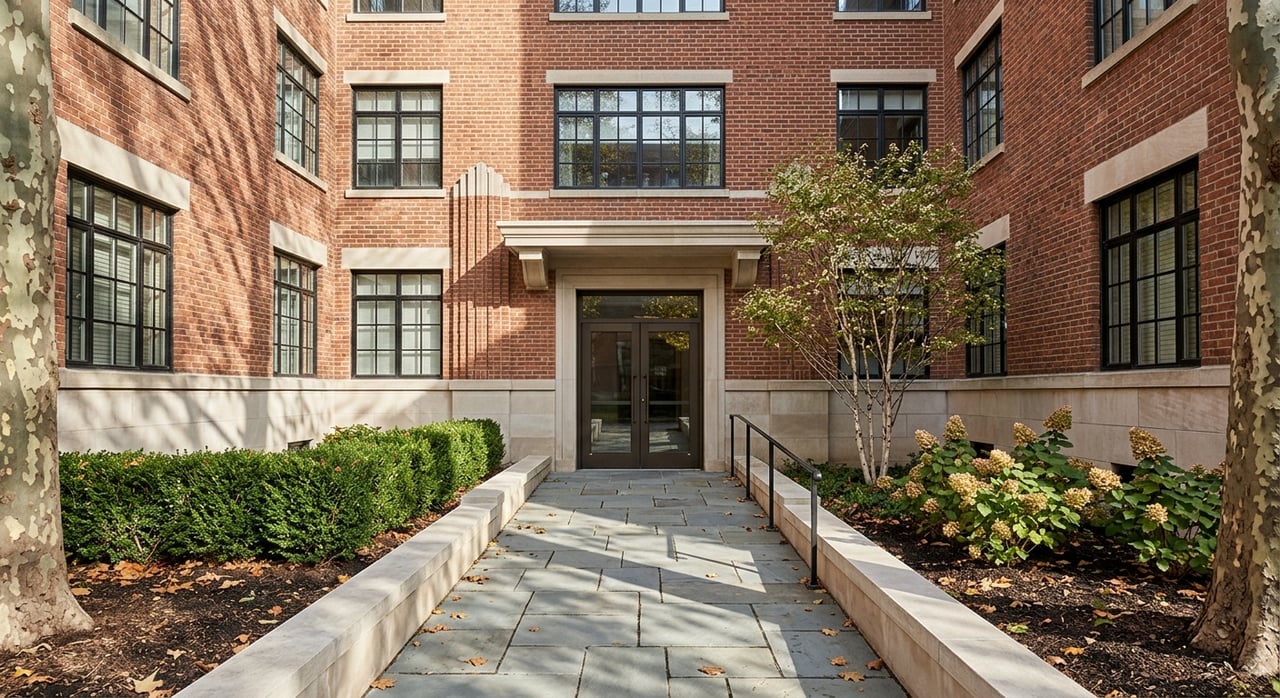
Forest Hills has a distinct feel that appeals to buyers who want more breathing room without leaving New York City. It is often described as a leafy, mostly residential neighborhood that sits somewhere between urban and suburban.
That balance is a big reason many buyers look here when they are ready to trade up. StreetEasy also points to two practical tradeoffs: longer commutes to Downtown Manhattan and less nightlife than some other parts of the city. For many space-focused buyers, that is an acceptable swap.
What your budget may buy
If you are trying to stay under about $1 million, Forest Hills tends to reward flexibility. Current StreetEasy data shows a median sale price of $429K, a 2-bedroom asking-price median around $489K to $498K, and a 3-bedroom asking-price median around $1.2M.
That gap matters. It suggests that if you want more square footage without stretching too far, co-ops are often where the strongest value shows up. The inventory mix supports that too, with more than 220 co-op listings versus just 17 two-bedroom condo listings in the current Forest Hills market snapshot.
Why co-ops lead for space
For growing households, co-ops are usually the main path to a larger home in Forest Hills under $1 million. There are simply more of them to choose from, and many offer room counts and layouts that work well for changing needs.
That does not mean every co-op is a bargain or every condo is overpriced. It means the co-op market gives you more chances to find usable space, flexible layouts, and a manageable purchase price in this neighborhood.
Two-bedroom co-op options
Many current two-bedroom co-ops in Forest Hills fall in the 800 to 1,150 square foot range. Recent examples include homes around 803 square feet as well as larger layouts around 1,100 to 1,150 square feet.
That size range can work well if you need a true two-bedroom or something with extra flex space. In Forest Hills, some of these homes are marketed as Jr-4 or convertible layouts, which can give you room for a nursery, home office, or guest setup without paying full three-bedroom pricing.
Three-bedroom co-op value
Three-bedroom co-ops are often the most compelling trade-up option for buyers who want to stay below $1 million. Current examples include homes around 1,350 to 1,450 square feet listed near $759K to $760K.
That is notable because the neighborhood’s broader three-bedroom asking median is much higher. In practice, many of these listings offer the kind of space-growing households actually need, even if the third room is better suited for a nursery, office, or den than a large standalone bedroom.
Flexible layouts matter
In Forest Hills, the label on the listing is not always the full story. A home marketed as a three-bedroom may function more like a two-bedroom plus den, while a Jr-4 may give you enough separation for daily life to feel much more comfortable.
One current example is a two-bedroom plus den, two-bath co-op asking $950K. For many buyers, that kind of layout can be more useful than a smaller traditional three-bedroom, especially if your needs include hybrid work, guests, or a young child’s room.
What condos look like
Condos are available in Forest Hills, but under $1 million the selection is much thinner. Current two-bedroom condo examples include an 880 square foot home last listed at $829K and a 1,000 square foot home listed at $745K.
Once you move into newer or more amenity-rich condo product, prices often climb quickly. Current StreetEasy search results show many two-bedroom condos at $1 million or more, while current three-bedroom condo inventory starts around $2.2 million to $2.4 million.
Why some buyers still prefer condos
Even with thinner supply, condos may still be the right fit for your household. Some newer condo buildings offer features that many buyers value day to day, such as in-unit washer and dryer, balcony or terrace space, and newer finishes.
A current example at Golden Gardens includes a balcony, private terrace, in-unit washer and dryer, optional parking, and a tax abatement through 2036. If convenience and a more straightforward ownership structure are high on your list, a condo may justify the narrower search.
Compare monthly cost, not just price
The listing price is only one part of the equation. In Forest Hills, your monthly carrying cost can vary quite a bit depending on whether you buy a co-op or a condo.
For co-ops, maintenance may include taxes and sometimes utilities like heat, hot water, cooking gas, cable, or internet. In the current sample, co-op maintenance ranges from $1,043 per month on a two-bedroom Jr-4 to $1,134 on a renovated two-bedroom, $1,747 on a three-bedroom plus den, and $3,445 on a larger three-bedroom prewar home.
For condos, common charges can look lower at first glance, but property taxes are usually separate. Current examples include $291 per month in common charges on one condo, $499 on another, and $664 on a third, with that third example also showing $605 per month in taxes.
The takeaway is simple: a lower fee does not always mean a lower monthly cost. You will want to compare the full monthly number, including mortgage, maintenance or common charges, taxes, parking, and any assessments.
Amenity tradeoffs to expect
Forest Hills co-ops often shine on practical building services. Depending on the building, you may find elevator access, laundry, live-in super, garage parking, storage, a gym, roof deck, courtyard, doorman service, and in some cases even a pool or outdoor play area.
That practical amenity mix can be a real advantage when your household is growing. These features may not feel flashy, but they often make everyday living easier.
Condos in the current sample tend to emphasize in-unit convenience and private outdoor space. If you value laundry inside the apartment, a balcony, or a terrace, a condo may better match your priorities even if your choices are more limited.
Transit remains a major plus
Forest Hills is especially appealing for buyers who do not want to give up rail access while searching for more space. The MTA says Forest Hills-71 Av is an accessible station served by the E, F, M, and R trains.
The nearby Forest Hills LIRR station adds another transit option. The MTA also lists nearby bus service including the Q23, Q60, Q64, Q74, QM4, and QM44.
Many listings are located within about a quarter-mile of the 71 Av subway and LIRR station. For buyers balancing commute time with the need for more square footage, that proximity can be one of the neighborhood’s strongest selling points.
Co-op rules to ask about early
If you are comparing Forest Hills co-ops, building rules deserve early attention. Approval processes, financial requirements, and sublet policies can vary from building to building.
One current example in The Fairfax notes board interview and approval, a 20 percent down payment minimum, and sublets allowed only after two years. It also notes parking for an added monthly cost.
These details matter because they shape both affordability and flexibility. Before you fall in love with a layout, make sure the building’s rules fit your plans.
Which option fits your household best
If your main goal is maximizing space under $1 million, Forest Hills co-ops are usually the strongest place to start. The current market offers more inventory, more flexible layouts, and more opportunities to find a spacious two-bedroom or adaptable three-bedroom home.
If your priorities lean toward newer finishes, in-unit laundry, private outdoor space, and a simpler ownership structure, condos may be a better fit. You will likely have fewer choices, and your budget may not stretch as far on size, but the day-to-day convenience can be worth it.
The key is to match the product type to how you actually live. For a growing household, the best home is not just the one with the most rooms. It is the one with the most usable space, the right monthly cost, and building rules that support your next chapter.
If you want help sorting through Forest Hills co-ops and condos under $1 million, especially if you are comparing layout value, monthly carrying costs, and board requirements, Kunal NYC Real Estate can help you build a practical plan and narrow the search with confidence.
FAQs
Are co-ops or condos more common in Forest Hills for buyers under $1M?
- Co-ops are much more common in the current inventory, with more than 220 co-op listings versus 17 two-bedroom condo listings in the Forest Hills snapshot referenced here.
What size two-bedroom homes are common in Forest Hills?
- Many current two-bedroom co-ops fall in the 800 to 1,150 square foot range, which often gives buyers enough room for a true second bedroom or flexible extra space.
Are Forest Hills three-bedroom co-ops always true three-bedroom layouts?
- Not always. Some are better described as flexible two-bedroom-plus-den homes, so it is important to review the actual floor plan and room use.
Do Forest Hills co-op fees usually include taxes?
- Many co-op listings indicate that maintenance includes taxes, and some also include utilities like heat, hot water, cooking gas, cable, or internet.
Are Forest Hills condo costs lower each month than co-op costs?
- Not necessarily. Condo common charges may look lower, but condo owners usually pay property taxes separately, so you need to compare the full monthly carrying cost.
What transit options do Forest Hills buyers have?
- The MTA says Forest Hills-71 Av is served by the E, F, M, and R trains, and the neighborhood also has the Forest Hills LIRR station plus nearby bus routes including the Q23, Q60, Q64, Q74, QM4, and QM44.
What co-op rules should buyers check in Forest Hills buildings?
- Buyers should ask about board approval, interview requirements, minimum down payment, sublet policies, parking costs, and any other building-specific rules that affect affordability or flexibility.