If you are weighing a move to Sunnyside, you are likely balancing two big questions: Which building type fits your budget and lifestyle, and how close do you want to be to the 7 train. This neighborhood in western Queens offers fast Midtown access with a calmer feel than nearby Long Island City, and a wide mix of prewar and modern buildings. In this guide, you will learn how Sunnyside’s rental options compare, what to expect for costs and screening, and how to choose a location that makes your commute easy. Let’s dive in.
Sunnyside at a glance
Sunnyside sits east of Long Island City and west of Woodside and Astoria, with three elevated 7 train stops along Queens Boulevard and small commercial strips like Skillman Avenue and Queens Boulevard. The area reads as community‑oriented and largely residential, with a quieter feel while keeping fast Midtown connections. You can explore the neighborhood overview and local services through the Queens Community Board 2 page for Sunnyside.
Rental building types you will see
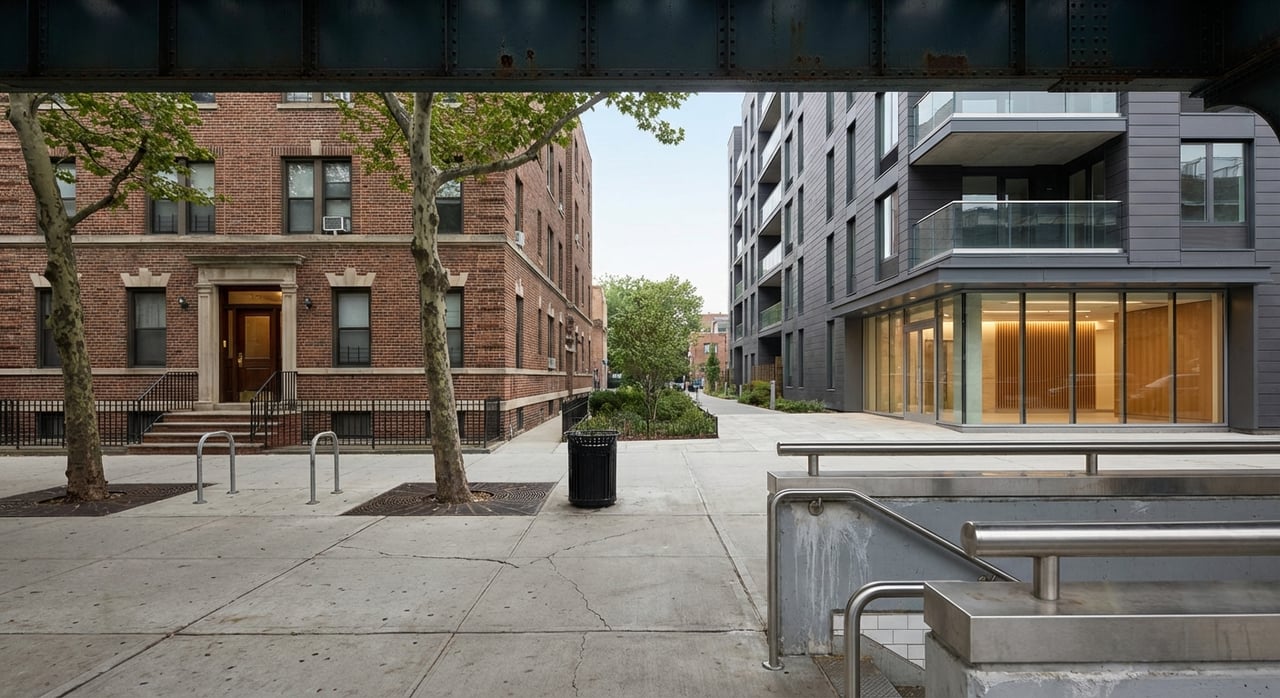
Sunnyside’s housing stock is a blend of prewar and postwar mid‑rises, rows of townhouses, and a limited set of newer boutique buildings. You will also find the Sunnyside Gardens planned community and cooperative area, a historic garden‑apartment district with a private community park. A neighborhood overview from Brown Harris Stevens outlines these patterns across Sunnyside’s streets and building scales (source).
Prewar walk‑ups and small brick buildings
- 2 to 5 stories, often with smaller kitchens and fewer closets.
- Coin or shared laundry is common, with no doorman and limited or no elevator.
- These are usually the most budget‑friendly options, but unit quality and layouts can vary. You can expect fewer amenities than in newer buildings (source).
Mid‑rise elevator buildings
- 5 to 8 stories, often on or near Queens Boulevard and other major corridors.
- Elevators, on‑site laundry, and sometimes a small gym or roof deck in newer conversions.
- Rents land in the mid‑range for Sunnyside (source).
Boutique or newer condo and mixed‑use buildings
- Modern 5 to 10 story developments with in‑unit laundry more often, central AC, package rooms, and small fitness spaces.
- Some offer part‑time staff or a doorman and are professionally managed.
- These carry a premium. Sunnyside has fewer large luxury towers than LIC, but there are pockets of amenity‑rich new inventory, as rental platforms show in active listings (source).
What amenities and costs to expect
Across Sunnyside, doorman buildings are less common than in LIC, but you will find elevator buildings, laundry rooms, and occasional roof decks. Newer boutique properties tend to include central air, package rooms, and in‑unit laundry. Prewar walk‑ups generally trade amenities for lower rent.
When you compare buildings, list your must‑haves and nice‑to‑haves. If in‑unit laundry or a gym is critical, focus on newer developments and expect a premium (source).
Commute and transit explained
The 7 train is Sunnyside’s core asset for commuting. Stations that serve Sunnyside or its edges include 33rd Street–Rawson Street, 40th Street–Lowery Street, 46th Street–Bliss Street, and 52nd Street on the Sunnyside/Woodside border (source). From central Sunnyside, riders often report roughly a 15 to 25 minute ride to Midtown and Grand Central, with timing affected by your station, walk time, and peak vs off‑peak hours (source).
Several bus routes also serve the area, including the Q32, Q39, Q60, and Q104. For a detailed look at station layouts and walking approaches, consult station pages such as 46th Street–Bliss Street, 40th Street–Lowery Street, and 52nd Street.
LIRR context
The Long Island Rail Road runs through Sunnyside Yard. A Sunnyside LIRR infill station has been proposed in planning discussions but has not been built. Current LIRR access for many residents is through nearby Woodside or Hunterspoint Avenue. You can read the background on the proposed station here (source).
How to choose by commute
If the shortest possible Midtown commute is a priority, target apartments within a 5 to 10 minute walk of 46th, 40th, or 33rd Street stations. Those extra blocks saved each morning and evening add up over time. If you want lower rent and a quieter setting, you may find better value a few blocks off Queens Boulevard or on side streets, especially near the gardens and rowhouse interiors (source).
Noise and location tradeoffs
The 7 line runs on an elevated structure along Queens Boulevard, and many Sunnyside stations sit above the avenue. Apartments directly beneath or adjacent to the boulevard can experience more train and traffic noise and vibration compared with interior blocks. When you tour, pause to listen for train noise and ask whether the windows have been upgraded or if any recent sound mitigation work was done (source).
What rents look like now
Rental numbers vary based on the data source and timing. A neighborhood average from Apartments.com using CoStar data shows, as of February 2026, studios around $1,882, one‑bedrooms around $2,047, and two‑bedrooms around $2,673 for Sunnyside (source). These averages reflect a broader time window and inventory set.
Listing‑based platforms that track active inventory often report higher medians for what is available right now. Recent snapshots show one‑bedroom medians in roughly the $2,600 to $3,100 range, depending on the month and listing mix (source). The gap exists because providers use different methods and timelines. Always note whether you are looking at a historical average or a current listing median when budgeting (source).
Lease terms and key fees
- Lease length: Most landlords offer 12‑month fixed leases. Shorter terms can exist, but they are less common and often cost more.
- Security deposit: New York State caps deposits at one month’s rent and sets handling rules for landlords of 6 or more units. Treat one month as the hard legal limit and confirm how the deposit will be held (source).
- Broker fees and disclosures: Under New York City’s FARE Act, effective June 11, 2025, if a landlord hires a broker, the landlord must pay that broker’s fee. Listings and agreements must disclose any tenant‑payable fees, and “no‑fee” ads are now common in those cases. You can still hire your own tenant agent and pay that broker directly. Review the city’s guidance on the FARE Act and ask for itemized fee disclosures in writing (source).
- Other upfront items: Expect first month’s rent, the one‑month security deposit, and an application or credit‑check fee in many buildings. Management companies typically require income and credit verification (source).
Screening and guarantors
Many NYC landlords apply the industry 40 times rule for applicants, where annual income is about 40 times the monthly rent. Guarantors often face a higher bar, commonly around 80 times the monthly rent. These are underwriting norms, not laws, and they vary by building. If you are relocating or lack local income, institutional guarantor products are widely used. Always check each building’s screening policy before you apply (source).
Rent‑stabilized units and long‑term planning
If long‑term cost stability matters to you, it is worth checking whether a unit is rent‑stabilized. Rent‑stabilized apartments come with renewal rights and annual guideline increases set by the Rent Guidelines Board. Review the latest adopted guideline summary for the current period (source). To check a specific unit’s status and rent history, request records through city resources and the DHCR rent history process, which is linked from the city’s rent increase guide (resource hub).
Quick renter checklist
- Confirm your walk time to the preferred 7 train station and test the route at your typical commute hour (station context).
- Ask who hired the broker and whether you will be charged. Request the FARE Act fee disclosure in writing (city FAQ).
- Verify the security deposit amount and where it will be held. Remember the one‑month maximum in New York State (AG guidance).
- Check whether the unit is rent‑stabilized if renewal rights and predictable increases are important to you (guide).
- If your income is short of the 40 times rule, ask whether the owner accepts institutional guarantors and the cost to use one (industry guide).
Sample listing language you may see
- “No broker fee. Landlord paid.”
- “12‑month lease. One month security deposit.”
- “Income of 40 times the rent required or qualified guarantor.”
- “In‑unit laundry. Package room. Fitness alcove.”
- “Near 46th Street–Bliss, 7 train.”
How to compare two Sunnyside options
- Map each address to the nearest 7 train station and time the actual walk on your phone.
- Add door‑to‑platform time and the typical 15 to 25 minute 7 train ride to Midtown (source).
- Note the building type and amenities. If a gym, elevator, or in‑unit laundry matter, budget for the boutique or newer building premium (source).
- Ask about noise. If the windows face Queens Boulevard or sit close to the elevated tracks, stand by the windows and listen during peak times (station context).
- Confirm upfront costs. Expect first month’s rent plus a one‑month security deposit, and ask for the FARE Act fee disclosure before you apply (AG guidance, city FAQ).
Final thought
Sunnyside offers a practical balance of value, neighborhood feel, and fast Midtown access. If you set a clear budget, choose a building type that matches your lifestyle, and test the commute from your preferred station, you will have a smooth search. When you are ready to tour with a local, data‑driven approach and clear expectations on screening and fees, reach out to schedule a consult with Kunal NYC Real Estate.
FAQs
How long is a typical Sunnyside commute to Midtown?
- Riders often report about 15 to 25 minutes on the 7 train to Midtown or Grand Central, depending on station, walk time, and peak vs off‑peak hours (source).
What upfront costs should I expect to rent in Sunnyside?
- Most renters pay first month’s rent, a security deposit capped at one month by New York State law, and an application or credit‑check fee if charged (source).
Which Sunnyside buildings tend to have in‑unit laundry?
- Newer boutique condos and mixed‑use buildings are more likely to feature in‑unit laundry and central AC, while prewar walk‑ups usually offer shared laundry or none on site (source).
Are broker fees still charged to tenants in NYC after the FARE Act?
- If the landlord hired the broker, the landlord must pay that broker’s fee, and listings must disclose any tenant‑payable fees; tenants can still hire their own broker and pay that broker directly (source).
Is there an LIRR station in Sunnyside right now?
- A Sunnyside LIRR station has been proposed but not built; current LIRR access is typically via nearby Woodside or Hunterspoint Avenue (source).