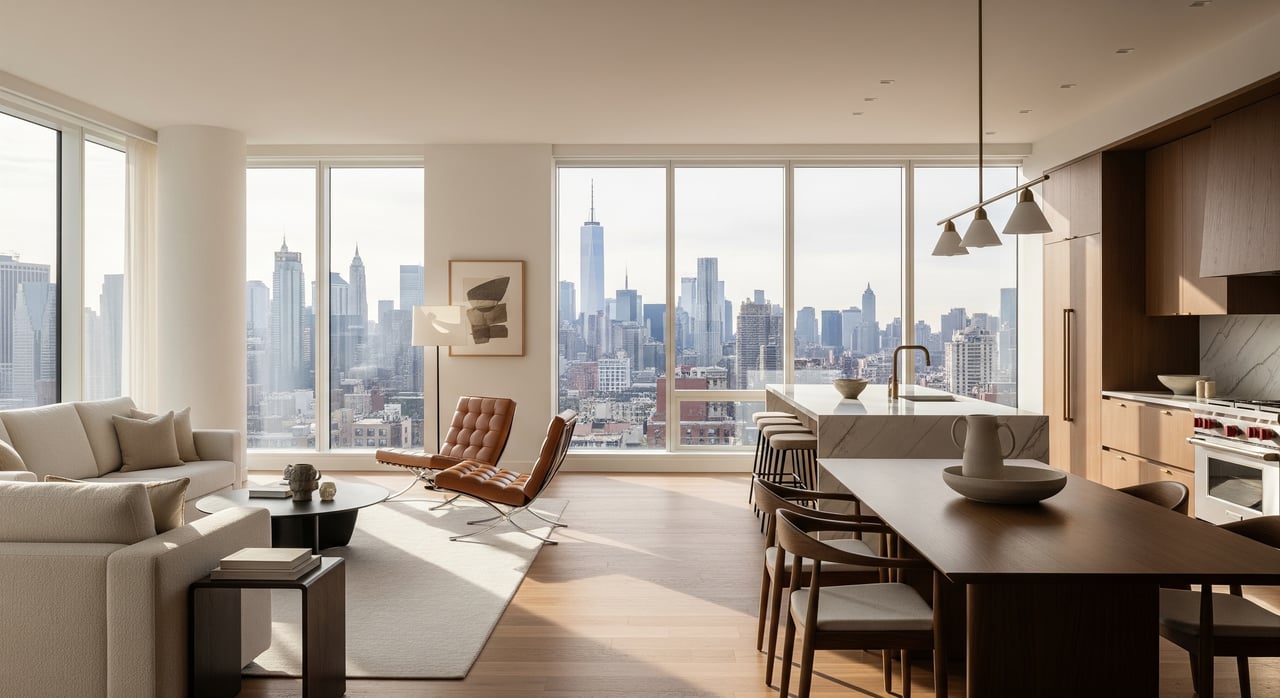
Is price per square foot the best way to price a Downtown Brooklyn condo? It is a helpful shortcut, but it does not tell the whole story. You want a clear path from a PPSF benchmark to a real list price or offer and a monthly payment you can afford. In this guide, you will learn how to build tight comps, adjust for building and unit differences, and connect PPSF to carrying costs so you can move with confidence. Let’s dive in.
What PPSF tells you and what it misses
Price per square foot lets you compare units quickly by dividing sale price by interior square footage. It is most useful as a starting point. In Downtown Brooklyn, buildings vary widely by age, amenity level, tax structure, and layout, so a raw PPSF can mislead you if you do not control for these factors.
For buyers, PPSF should translate into two things: a realistic target price and a projected monthly carrying cost. For sellers, PPSF helps you position your list price relative to true comparables while explaining any premiums or discounts. Your goal is a range, not a single number.
Build relevant PPSF comps
Define your exact unit
- Condo vs co-op, as they carry different cost structures.
- Interior square footage, beds, baths, floor, line, exposure, and any balcony or terrace.
- Resale vs sponsor unit, and whether the square footage is standard and verified.
Set building and geography filters
- Start with the same building. If none, use the same block or within about a half mile in the Downtown Brooklyn core.
- Prioritize buildings with similar vintage and scale, such as glass high-rises compared to other modern towers.
Choose a time window
- Aim for the most recent 6 to 12 months so your comps reflect current demand and rate conditions.
- Extend to 18 months only if inventory is thin and you adjust for market shifts.
Screen sale types
- Exclude unusual cases like bulk sales, foreclosures, or large sponsor concessions unless they are common in that building.
- Confirm whether the sale was fully marketed or atypical, and note it.
Calculate a base PPSF
- PPSF equals sale price divided by unit square footage. Use recorded or offering plan square footage and note any listing-to-record discrepancy.
- When you have multiple comps, look at the median and a weighted mean to reduce the impact of outliers.
Adjust for differences that matter
- Floor and view, layout and line, outdoor space, parking, recent renovations, and fee structure.
- Treat parking as a separate dollar add rather than folding it into PPSF.
- Note assessments and abatements that alter carrying costs for otherwise similar units.
Produce a defensible range
- Present a band for market PPSF and show your justified list or offer PPSF after adjustments.
- Explain any remaining uncertainty when data are thin and recommend verification steps.
Factors that move PPSF in Downtown Brooklyn
New construction premium
Newer condos often earn premiums for ceiling height, mechanicals, finishes, and full-service amenities. Compare new development only to similar new-build sales in the same complex or from a similar developer. When direct comps are limited, present a premium range instead of a single percentage.
Amenities and services
Doorman, gym, pool, roof deck, and on-site management can push PPSF higher. If you are comparing a boutique, low-fee building to a full-amenity tower, make a qualitative adjustment or source comps within the same amenity tier.
Floor, exposure, and views
Higher floors and unobstructed skyline or water views often carry meaningful premiums. Same-building, different-floor sales are your best guide. View premiums can be nonlinear, so a great view can be more valuable than a modest floor bump without a view.
Line and layout quality
Corner lines, dual exposures, and efficient layouts with distinct bedrooms tend to command more. Odd-shaped rooms, long hallways, or small bedrooms may warrant a discount even when the PPSF looks similar.
Outdoor space and parking
Balconies and terraces add value that is not always captured by PPSF. Parking often prices as a separate dollar figure. Treat these as discrete adds when you reconcile comps.
Taxes, common charges, and assessments
Two units at the same PPSF can lead to very different monthly payments. For condos, you pay property tax plus common charges. Special assessments and the presence or expiration of a tax abatement will change your monthly number. Always factor fees into your final decision.
Sponsor units and concessions
Sponsor sales sometimes include incentives or pricing strategies that do not reflect steady-state resale values. Note and adjust for concessions when you use these as comps.
Reconcile PPSF with monthly carrying costs
A PPSF number helps you estimate price, but your monthly payment drives affordability. Use these steps to connect the dots:
- Convert PPSF to price: Price equals PPSF times unit square footage.
- Estimate monthly carrying: Mortgage payment plus property tax divided by 12, condo common charges, homeowners insurance divided by 12, utilities or extras, and any assessment divided by 12.
- Compare options by cost per square foot monthly: Effective monthly cost per square foot equals total monthly carrying divided by unit square footage.
Worked example (HYPOTHETICAL)
- Assumptions: 800 square feet; market PPSF for illustration equals 1,000 dollars per square foot, so price equals 800,000 dollars.
- Financing: 20 percent down, 30-year fixed at 6 percent on a 640,000 dollar loan. Principal and interest are about 3,839 dollars per month.
- Taxes and fees: Annual property tax equals 8,400 dollars, which is 700 dollars per month; condo common charges equal 900 dollars per month; insurance equals 100 dollars per month.
- Monthly carrying: 3,839 plus 700 plus 900 plus 100 equals 5,539 dollars per month.
- Effective monthly cost per square foot: 5,539 divided by 800 equals 6.92 dollars per square foot per month.
Use this to compare a lower PPSF unit with higher fees against a higher PPSF unit with lower fees. The monthly may surprise you.
Verify with trusted data sources
- Pull recorded sale prices and deeds from the NYC register using the ACRIS portal. Start with the building and unit and verify the final price using the search tool in the NYC ACRIS system.
- Review current and historical tax bills and assessed values with the NYC Department of Finance. This helps you confirm the tax class and the presence or expiration of abatements.
- Confirm building details such as year built, certificates of occupancy, and any violations that could affect value using the NYC Department of Buildings.
- For neighborhood PPSF trends and supply signals, check StreetEasy’s Market Reports and REBNY research and policy resources.
- For financing context, reference current mortgage rate snapshots from Freddie Mac’s Primary Mortgage Market Survey.
A quick checklist you can use
- Pull the last 6 to 12 months of closed sales in the same building and, if possible, the same line.
- Confirm square footage using the offering plan, recorded deed, or floor plan and flag any discrepancies.
- Identify sale types and note sponsor incentives or distressed sales.
- Record floor, exposure, layout, outdoor space, storage, and parking.
- Retrieve the latest tax bill and confirm common charges and any special assessments.
- Adjust comps for floor, view, amenities, layout, outdoor space, and fee structure.
- Produce a PPSF range and translate it into a price and monthly carrying estimate under your financing scenarios.
Buyer and seller tips for Downtown Brooklyn
- Buyers: Always weigh PPSF against monthly carrying. A slightly higher PPSF in a building with lower taxes and common charges can be the better monthly outcome.
- Sellers: Lead with your best comps and a clear narrative for any premium you claim, such as view, line, renovation, or amenity level. Transparency builds trust and helps justify your list price.
- Everyone: Date your assumptions. Rates, inventory, and incentives change. Re-run the numbers before you submit an offer or go live with a listing.
When to bring in a local expert
Downtown Brooklyn is diverse at the building level. The strongest pricing decisions come from tight same-building comps, verified fee data, and a clear translation from PPSF to monthly costs. If you want help pulling ACRIS and DOF records, sizing up amenities, or building a defensible price range for your unit, reach out to a local advisor who lives in these numbers.
If you would like a tailored PPSF comp set and a carrying-cost breakdown for your condo, connect with Kunal NYC Real Estate. Schedule a personalized consultation and get a clear plan.
FAQs
How should a first-time buyer use PPSF in Downtown Brooklyn?
- Start with same-building comps to find a PPSF range, then convert that range into a price and monthly carrying estimate so you can test real affordability.
Why do two similar PPSF condos have different monthly costs?
- Taxes, common charges, assessments, and abatements drive monthly costs, so identical PPSF can lead to very different payments.
What time window should I use for comps?
- Use 6 to 12 months of sales to reflect current conditions, and extend to 18 months only if data are thin and you adjust for the market shift.
How do I adjust for floor and view when comps are limited?
- Use same-building, different-floor sales when available; otherwise apply a reasonable range and explain the uncertainty, prioritizing qualitative notes over forced precision.
Where can I verify a closing price or tax bill?
- Check recorded sale prices on the NYC ACRIS system and confirm taxes with the NYC Department of Finance.