Selling a small Gramercy studio this spring? With the right staging, you can make your space feel larger, more flexible, and more inviting in photos and in person. In a neighborhood where many studios compete on size and price, how you present your home can be the difference between quick interest and sitting on the market. In this guide, you’ll learn how to stage for Gramercy buyer expectations, work within co-op rules, and prep for photos that drive clicks and showings. Let’s dive in.
Why staging matters in Gramercy
Gramercy buyers value walkability, access to parks, smooth commutes, and a well-kept building. Many are young professionals, students, and investors who need a studio that works for living, sleeping, dining, and sometimes working. They also compare your listing with many similar units nearby.
Spring brings more active buyers, which raises the bar on presentation. Clean, decluttered spaces with clear photos and smart staging stand out in listing feeds and lead to more showings. When you show multi-functionality and flow, you help buyers look past square footage and focus on livability.
Small studio staging basics
Declutter and depersonalize
Remove personal photos, extra decor, and bulky pieces. Keep only a few neutral accents so the space reads larger. Clear counters and surfaces, and store items out of sight to create clean lines.
Scale and layout for flow
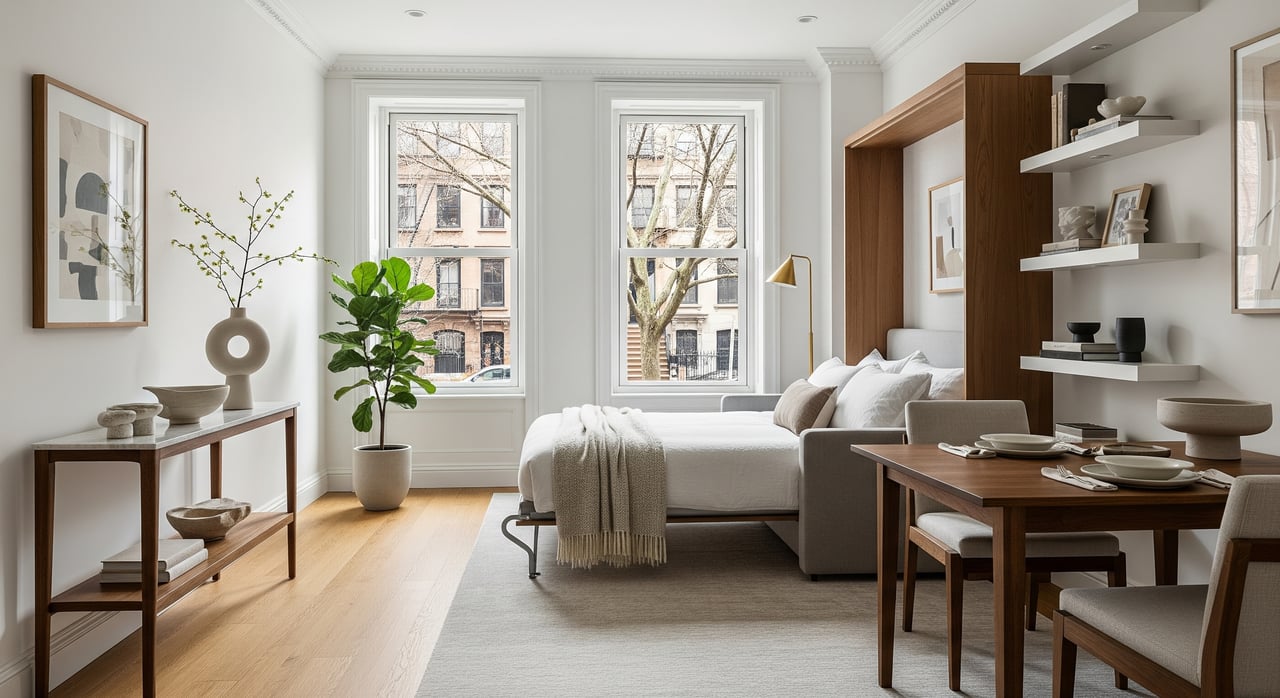
Use scale-appropriate furniture and leave generous pathways. Define zones for living, sleeping, dining, and work with a minimal number of pieces. Keep furniture leggy and low-profile so more floor and wall area stays visible.
Lighting and color
Maximize natural light by opening shades and cleaning windows. Add layered lighting with warm, neutral bulbs to avoid harsh tones in photos. If needed, unify the space with light-toned paint for a brighter, more cohesive look.
Storage cues that reassure
Show buyers how storage works, even if it is limited. Use neat open shelves, vertical bookcases, and under-bed bins that are out of sight. Keep closets tidy to signal usable capacity.
Pre-war vs modern strategies
Pre-war studio tactics
Pre-war buildings often have character details, smaller kitchens, and tighter entryways. Highlight original moldings or radiators by keeping them clean and unobstructed. Use mirrors near windows to reflect light, and choose a low-profile bed or daybed to keep sightlines open.
Emphasize vertical storage with a tall bookcase or floating shelves to free floor space. Consider small upgrades like modern light fixtures, new outlet covers, or updated hardware for a fresh feel.
Post-war studio tactics
Modern studios often have open plans and larger windows, which can look sparse without defined zones. Use area rugs to mark living, sleeping, and dining areas while keeping the room open. A slim dining table with stackable chairs implies function without crowding.
If space allows, add a compact desk or console behind a sofa to signal a work zone. Keep styling contemporary and minimal, and carry one accent color through textiles for cohesion.
Room-by-room priorities
Entry that sets the tone
Keep a clear pathway with a slim console or wall hooks. Add a single mirror to enlarge the feel and one accessory for polish. Remove shoe racks or bins that crowd the door.
Main living and sleep zones
Define sleep and living areas without overwhelming the room. If you already have a murphy bed or sofa bed, style it neatly, but avoid suggesting major installations you do not have. Use a neutral area rug to anchor the seating zone and keep decor restrained.
Kitchen refresh that reads clean
Clear counters and hide small appliances. Polish fixtures, clean grout, and stage a simple two-setting breakfast arrangement. Keep one small plant or a bowl of fruit for warmth.
Bath reset that feels new
Replace an older shower curtain with glass or a crisp new curtain. Add a new bath mat and neatly folded towels. Remove personal items and polish mirrors and fixtures.
Closets that prove usability
Edit contents so there is visible space on shelves and rails. Use matching slim hangers to reduce visual clutter. Leave one organized section open during showings and photos to showcase functionality.
Budget-first staging plan
Free and low-cost wins
- Declutter and depersonalize every room
- Deep clean, especially kitchen and bath; steam-clean rugs
- Rearrange and right-size existing furniture to improve flow
- Fix visible issues like scuffs, loose knobs, or dripping faucets
Smart modest upgrades
- Paint walls in light, neutral tones for a unified look
- Refresh textiles: a neutral rug, cohesive bedding, simple curtains
- Replace dated light fixtures and add lamps for layered lighting
- Schedule professional cleaning and a handyman for quick fixes
When higher spend pays
- Consider professional staging if the unit is vacant or furnished with oversized pieces
- Use virtual staging for a vacant unit if you disclose it clearly in the listing
- Explore small, high-impact updates only if they improve appeal and expected outcomes
Timeline for the spring market
- 3 to 4 weeks out: deep clean, repair, declutter, finalize paint touch-ups, map your staging plan
- 1 to 2 weeks out: set final layout, add lighting and textiles, schedule professional cleaning
- Photo day: shoot in the morning or late afternoon for best natural light; consider an exterior twilight shot
- Listing live: confirm floor plan, measurements, and disclosures are ready
If you are in a co-op, allow extra time in case building rules affect scheduling or access.
Photography and floor plans
Photo day tips that sell
Aim for natural light and consistent, warm bulbs. Capture multiple angles of the main room to show flow, and include the kitchen, bath, and entry. Use wide-angle shots without distortion so buyers trust what they see.
Floor plans and simple tours
Provide an accurate floor plan and square footage to set buyer expectations. Short, well-lit video tours or virtual walk-throughs can help out-of-town buyers. Keep the focus on the home’s strengths, like light, ceiling height, and storage solutions.
Virtual staging notes
Virtual staging is cost-effective for vacant spaces and can speed up marketing. Always label virtually staged photos and follow rules from your listing service. Avoid editing that hides layout issues and keep images consistent with the space.
Co-op and condo rules in Gramercy
Many Gramercy studios are in co-ops with house rules that may affect staging and scheduling. Routine staging and furniture placement are usually fine, but check bylaws before painting structural elements or changing fixtures. Confirm any showing or access requirements with building management.
Follow local disclosure rules. Do not conceal material defects with staging. If you choose virtual staging, clearly disclose it in the listing description per listing service requirements.
Quick checklists
Pre-photo checklist
- Remove personal photos and visible clutter
- Deep clean kitchen and bath; empty trash and recycling
- Make the bed and arrange pillows; set a simple table vignette
- Open window treatments and turn on all lights
- Hide bins, cleaning tools, and toiletries
- Place one mirror and one rug to define key zones
Minimal staging kit
- Low-profile sofa or daybed
- Neutral area rug sized to the living zone
- Two matching side tables and lamps
- Foldable dining table or bistro set
- One tall bookshelf for vertical storage
- Cohesive bedding, a few throw pillows, and one art piece
Photographer brief
- Prioritize natural light and request multiple angles of the main room
- Keep color balance accurate with minimal distortion
- Include kitchen, bath, entry, and one neighborhood exterior
- Use the floor plan and key dimensions to plan shots
Ready to list with confidence
A small Gramercy studio can sell quickly when it shows a clear, flexible layout and a bright, calm feel. Focus on decluttering, scale, lighting, and storage cues, then capture it with honest, well-composed photos. With a budget-first plan and a tight timeline, you will be ready for the energy of the spring market.
If you want a marketing-led staging and photo plan tailored to your building and buyer profile, reach out to Kunal NYC Real Estate. Schedule a personalized consultation.
FAQs
Do Gramercy studios really need staging in spring?
- Yes. Spring brings more buyers, and clean, staged studios draw more clicks and showings in competitive micro-markets.
How should I stage a vacant Gramercy studio for photos?
- Use minimal physical staging or clearly labeled virtual staging, and focus on defining living, sleeping, and dining zones without clutter.
Can I paint or change fixtures in my Gramercy co-op before listing?
- Routine staging is usually fine, but check co-op bylaws and management rules before painting or altering fixtures.
What are the most important photos for a small studio listing?
- Multiple angles of the main room, clean kitchen and bath shots, the entry, and one exterior or neighborhood context image.
Do I really need a floor plan for a studio?
- Yes. An accurate floor plan and square footage set expectations and reduce no-shows from mismatched expectations.