If you are thinking about moving to Astoria, one question matters more than almost anything else: what does daily life actually feel like once the boxes are unpacked? Near the N/W, Astoria tends to feel practical, connected, and busy in a way many NYC movers want. You get a neighborhood shaped by transit, strong food options, major parks, and a mix of housing types that can suit different budgets and routines. Let’s dive in.
Transit shapes daily life
Living near the N/W in Astoria often means your routine is built around a reliable transit corridor. The N train runs from Astoria-Ditmars Blvd to Brooklyn at all times, and the W provides weekday service at stations including Astoria-Ditmars Blvd, Astoria Blvd, 30 Av, Broadway, 36 Av, 39 Av, and Queensboro Plaza.
That matters because the line is not just a way to get to work. It shapes how you run errands, meet friends, and move through the city. Astoria Blvd also connects to the M60 SBS for LaGuardia, and Queensboro Plaza connects to the 7, so you have more than one transit option when your day changes.
The feel of the corridor is distinct too. Because the line is elevated and local, parts of 31st Street have a more transit-heavy, urban character than quieter side streets nearby. If you like being close to movement and convenience, that can be a real plus.
Recent upgrades also make a difference in daily use. The MTA says the Astoria Line rehabilitation was completed across multiple stations, including Astoria Ditmars Blvd, Astoria Blvd, Broadway, 39 Av-Dutch Kills, 36 Av, and 30 Av, with elevators added at Astoria Blvd.
Avenue blocks feel active
One of the biggest lifestyle patterns in this part of Astoria is the contrast between busier avenues and calmer residential streets. Along major shopping corridors, you are likely to find restaurants, laundromats, beauty parlors, small markets, and other daily-use businesses concentrated close together.
City planning documents identify Astoria Boulevard, Steinway Street, Broadway, 30th Avenue, and 31st Street as important local commercial corridors. In practical terms, that means everyday errands often fit easily into a short walk rather than a long trip across the neighborhood.
For many renters and buyers, that mix is the appeal. You can step out onto a more active avenue for coffee, groceries, or dinner, then head back to a more residential block that feels quieter.
Dining is part of the routine
Astoria’s food scene is not just a weekend perk. It is part of everyday living. Eater’s Astoria dining overview describes the neighborhood as a strong restaurant market shaped by relative affordability, proximity to Manhattan, and immigrant history.
That shows up clearly near the N/W stops, especially around Broadway and 30th Avenue. You can find a wide range of options sitting close together, including Greek tavernas, Croatian restaurants, arepas, halal Thai, bars, and more. For you, that can mean less planning and more flexibility on a normal Tuesday night.
Astoria’s food scene also keeps evolving. Resy’s 2024 guide to Astoria dining highlights the Little Egypt stretch on Steinway Street, long-running Greek spots like Telly’s Taverna, and a mix of Mexican, Peruvian, vegan, omakase, and newer concepts at World Artisan Market.
The key takeaway is simple: this is not a one-note dining neighborhood. You are living in a place where food variety is part of the neighborhood identity, not an occasional bonus.
Legacy spots add character
Astoria also has places that help daily life feel rooted rather than interchangeable. Bohemian Hall & Beer Garden dates to 1910 and remains one of the neighborhood’s best-known gathering places, with food, drinks, and events.
Even if you do not visit often, places like that shape the atmosphere of the neighborhood. They add a sense of continuity that many people look for when choosing where to live in Queens.
This is part of what makes Astoria near the N/W feel established. You are not moving into a corridor made up only of new openings. You are moving into an area where long-running institutions and newer businesses coexist.
Parks give you breathing room
A big reason Astoria works for so many people is that the neighborhood is not all pavement and storefronts. Astoria Park is a major everyday amenity, not just a small patch of green.
NYC Parks describes it as a nearly 60-acre community park with the city’s oldest and largest pool, plus tennis courts, a running track, trails, basketball courts, playgrounds, and East River views. That range of uses matters because it gives you options for exercise, downtime, and meeting up with friends without leaving the neighborhood.
For many people, park access changes how a neighborhood feels over time. A large park nearby can make mornings, weekends, and work-from-home breaks feel easier and more balanced.
There is also another waterfront option close by. Socrates Sculpture Park is a free five-acre waterfront park open daily from 9 a.m. to sunset, and its directions note that N/W riders can get off at Broadway and walk west.
Culture is built into the neighborhood
Astoria near the N/W is not only about convenience. It also has a strong cultural layer. The Museum of the Moving Image sits at 36-01 35 Avenue next to historic Kaufman Astoria Studios, tying the neighborhood to film and media history in a visible way.
The museum’s neighborhood guide also notes that Astoria is home to more than 100 ethnic groups and offers a wide range of dining options. That helps explain why the area often feels lively and layered instead of uniform.
This kind of cultural infrastructure can matter more than people expect. It gives you more to do close to home and helps the neighborhood feel interesting beyond your immediate block.
Libraries also support the area’s everyday rhythm. The Steinway branch offers books, free Wi-Fi, computer workstations, classes, and programs, while Broadway Library reopened in 2024 with a computer center, classroom, meeting room, and stage area through Queens Public Library.
Housing feels mixed, not one-note
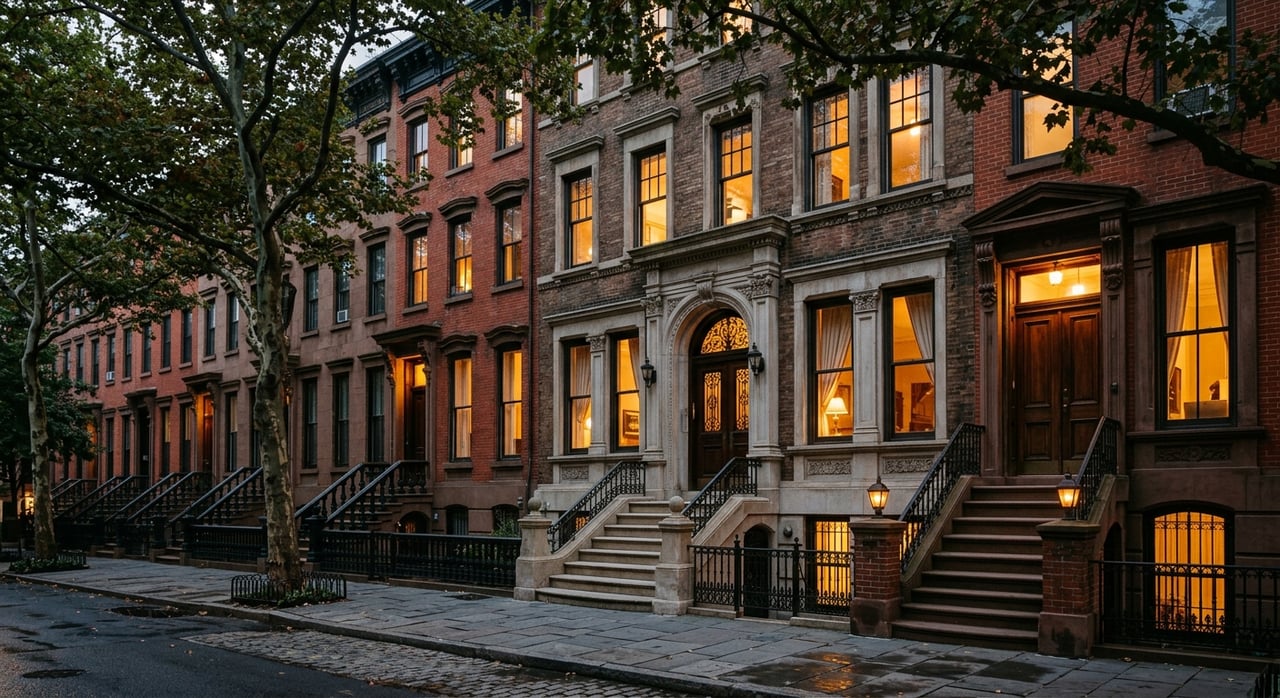
From a real estate perspective, one of Astoria’s strengths is variety. According to NYC Planning, the greater neighborhood includes mid-rise walk-up and elevator apartment buildings, two- and three-story row houses, one- and two-family homes, and higher-density multifamily buildings.
That mix means your day-to-day experience can shift quite a bit depending on the exact block. Some areas feel more residential and low-rise, while wider streets and shopping corridors tend to include more apartment buildings and mixed-use properties.
A second city planning document gets even more specific. On narrower streets, housing is mainly one- to two-family buildings and multi-family walk-ups from one to five stories. On wider streets, the built form shifts more toward two- to five-story apartment buildings with ground-floor retail.
For you, the takeaway is that Astoria near the N/W usually offers a layered neighborhood experience. It is not a high-rise district, but it is not purely residential either. It is a walkable mixed-use area with active avenue blocks, quieter side streets, and a broad range of housing formats.
What everyday life usually feels like
If you picture daily life here, it often looks like this: a quick subway trip, errands handled on foot, several dinner options within a few blocks, and regular access to parks and cultural spaces. That balance is what draws many people to Astoria in the first place.
For renters, the appeal is often convenience and neighborhood energy. For first-time buyers, especially those looking at value-conscious options in commuter-friendly parts of Queens, the appeal may be the mix of transit access, established housing stock, and everyday livability.
The most important thing to know is that Astoria near the N/W is not defined by just one feature. It works because transit, food, parks, culture, and housing all overlap in a way that supports real day-to-day life.
If you are weighing a move to Astoria or comparing it with other Queens neighborhoods, working with a guide who understands commuter-friendly locations, housing types, and the practical tradeoffs block by block can make the search much easier. To talk through your options, connect with Kunal NYC Real Estate.
FAQs
What is daily life like in Astoria near the N/W train?
- Daily life near the N/W in Astoria often feels transit-connected, walkable, and mixed-use, with easy access to restaurants, errands, parks, and cultural destinations.
What transit options are available near the N/W in Astoria?
- The N runs at all times, the W serves Astoria on weekdays, Astoria Blvd connects to the M60 SBS for LaGuardia, and Queensboro Plaza connects to the 7.
What kinds of housing are common in Astoria near the N/W?
- Housing near the N/W includes one- and two-family homes, row houses, walk-up apartments, elevator buildings, mixed-use properties, and some larger multifamily buildings.
What parks and outdoor spaces are near the N/W in Astoria?
- Astoria Park is the main outdoor amenity, with a large pool, courts, trails, playgrounds, and East River views, and Socrates Sculpture Park is another nearby waterfront option.
What makes Astoria near the N/W appealing to renters and buyers?
- Many renters and buyers are drawn to the area for its subway access, active commercial corridors, broad dining options, established housing stock, and overall convenience for daily life.